
In today’s highly competitive job market, traditional career paths like medicine and engineering have become increasingly saturated, making it challenging for students to secure their desired positions. Even a perfect score in JEE or in NEET is unable to secure the Top most colleges of India.
Therefore following article will help understand why to chose an alternate and not so difficult to enter, education and career path – AGRICULTURE
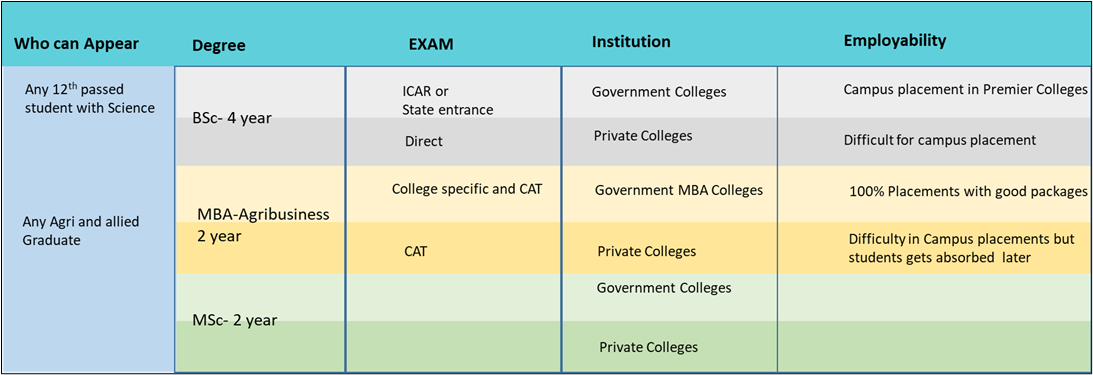
REASON 1 : EASY ACCESS
While the JEE and NEET exams might feel like a concrete jungle of competition, the agriculture entrance exams are like a gentle stroll – way fewer fellow travelers vying for those coveted spots. It’s a laid-back, mellow vibe that’ll have you feeling as relaxed as basking in the winter sun. Embrace the journey with a twist – from backup plan to the main stage!
All india Level exams like JEE and NEET are taken by more than 40 lakh students every year , at the same time less 2 lakh students took Agri and allied entrance examinations. Same ratio goes for PG levels .
The thing is, if you want to snag a seat at a top medical or engineering these days, you might need to grind even from 8th grade (talk about early!). Back in the day, the competition for these top colleges was mostly between folks who went to those fancy coaching institutes in big cities. But with online coaching exploding and institutes popping up everywhere, even in smaller towns, things are getting way more competitive. Sure, the Agricultural Entrance exams aren’t also exactly a walk in the park, but with fewer
“Back in the day, Agriculture was sometimes seen as a second option. Many students who got in through the ICAR exams might have tried for medical or engineering first. The good news is, a lot of those graduates are now rocking it overseas. However, there were exceptions where students directly joined the Agriculture and allied degree courses after completing their 12th grade.”
REASON 2 : PROMISING SECTOR
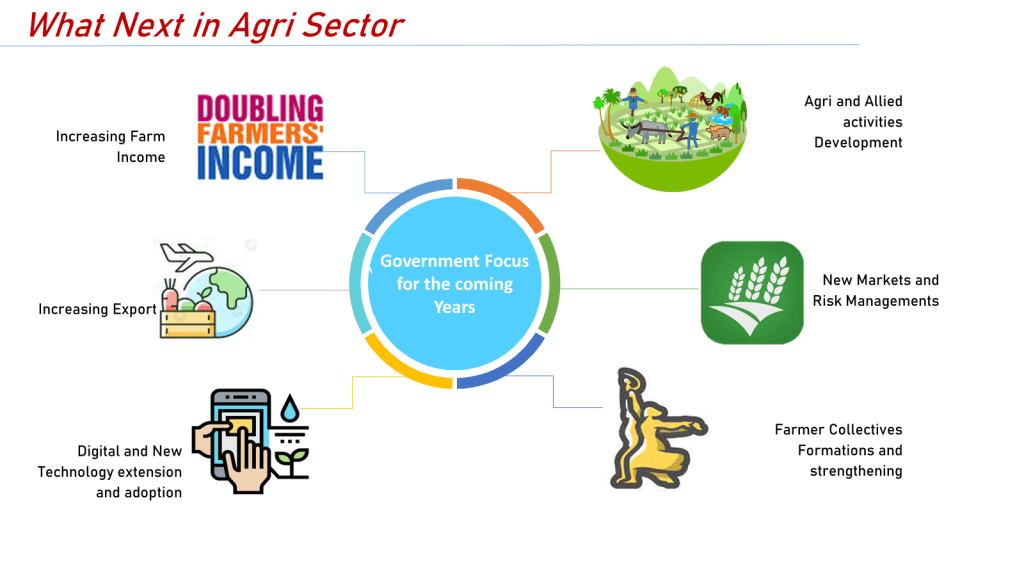
- Technological Advancements: Adoption of modern technologies such as precision farming, drones, and biotechnology has revolutionized agriculture in India. These technologies enhance productivity, reduce wastage, and ensure better quality produce. The government’s push for digital agriculture through initiatives like eNAM (National Agriculture Market) further supports this trend.
- Government Policies and Support: The Indian government has implemented various schemes and policies to support the agricultural sector. Programs like PM-KISAN, PMFBY, and Agri-Infra Fund provide financial assistance, insurance, and infrastructure development. These initiatives create a favorable environment for agricultural growth and investment.
- Export Potential: India’s agricultural exports have been growing steadily. Products such as rice, spices, tea, and horticultural produce find significant markets overseas. The government’s focus on boosting agricultural exports through better logistics and trade policies has further propelled the sector’s growth. India’s agricultural and processed food products exports stood at US$ 5,987 million in the first quarter of FY 2022-23, up by 14% YoY.
REASON 3 : NEED OF SKILLED WORK FORCE
The agriculture sector is undergoing a transformation, driven by factors such as population growth, technological advancements, sustainability concerns, and the expansion of allied industries. This has created a significant demand for skilled agricultural graduates who can contribute to addressing global food security challenges and driving innovation in the sector.
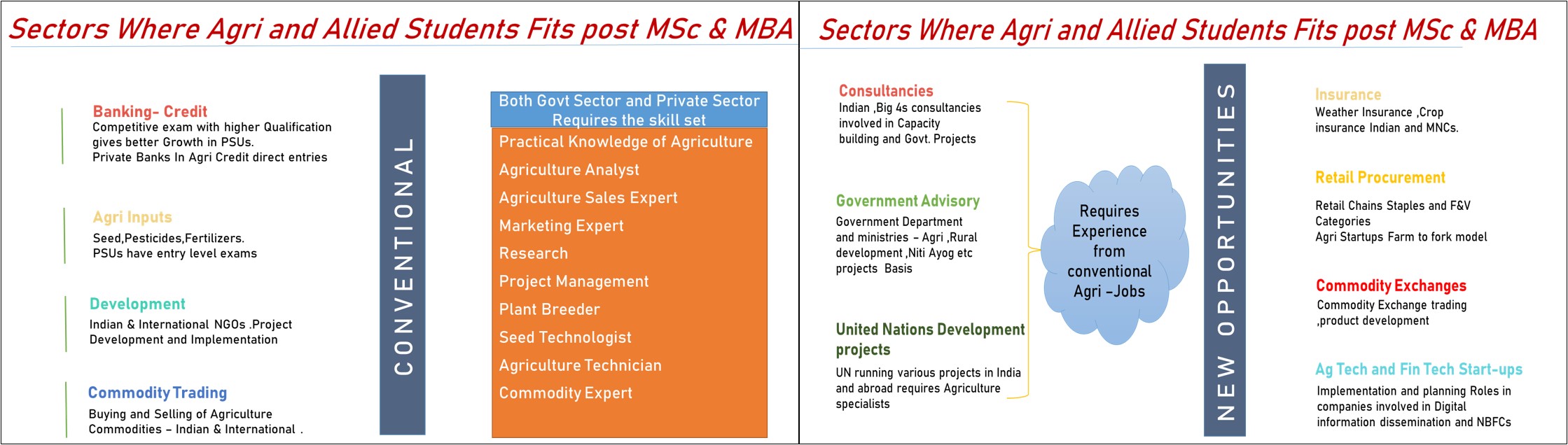
A. Conventional areas for Agri Students
- Supply Chain Management: Efficient supply chain management is vital for reducing post-harvest losses and ensuring timely delivery of produce. Graduates with expertise in logistics, cold chain management, and quality control are in high demand.
- Sustainable Farming Practices: As sustainability becomes a priority, there is a need for professionals trained in organic farming, soil health management, and water conservation techniques. These experts help promote environmentally friendly practices that are essential for long-term agricultural productivity.
- Agribusiness Management: Agribusiness encompasses a wide range of activities from production to marketing. Professionals with skills in business management, finance, marketing, and rural development are required to manage agribusiness ventures effectively.
- Agricultural Finance: The need for financial services tailored to the agricultural sector creates roles for agriculture graduates in banks and financial institutions. They help design and implement loan products, insurance schemes, and investment plans suited to the needs of the farming community
- Research and Development: Continuous innovation in crop varieties, pest control, and agricultural practices is necessary to address challenges such as climate change and food security. Research scientists and agricultural engineers play a critical role in developing new solutions. Budget Allocation – Rs. 1.24 lakh crore (US$ 15.9 billion)Research budget – Rs 8,514 cr (US$ 1.1 billion)
B. New Avenues for Agriculture Graduates
- AgriTech Startups: The rise of agritech startups in India presents numerous opportunities for agriculture graduates. These startups focus on innovative solutions for farming challenges, offering roles in product development, technical support, and business development.
- Food Processing Industry: With a growing emphasis on value addition, the food processing industry is expanding rapidly. Agriculture graduates can find opportunities in quality assurance, product development, and supply chain management within this sector.
- Advisory and Consultancy Services: Many agriculture graduates are now working as consultants, providing advisory services to farmers on best practices, crop planning, and financial management. This helps farmers optimize their operations and improve profitability.
- Agricultural Technology and Innovation: The integration of technology in agriculture necessitates experts in Agri tech. Professionals skilled in data analytics, remote sensing, and AI are crucial for implementing precision farming techniques and improving crop yields.
REASON 4 : RESILLIENT ROOTS
The agriculture sector is like that one friend who’s always there for you, no matter what life throws your way. Even when the economy takes a nosedive, this bad boy just keeps on trucking. Why? Well, let me break it down for you:
- Food is life, No matter how broke we are, we gotta eat. And as long as people are eating down, the agriculture sector will be thriving.
- The government’s got our back. When the going gets tough, our trusty leaders shower us with subsidies, support prices, and financial assistance – it’s like a warm, comforting hug for the entire sector.
- Diverse economic contribution? More like a one-stop shop! Agriculture contributes to everything from employment to raw materials to export earnings. It’s like the Swiss Army knife of the economy, always ready to lend a helping hand
“I vividly recall the challenging times during the 2008-09 global economic recession, widely known as the aftermath of the subprime crisis in the United States. It was a period of widespread layoffs, stagnant fresh hiring, and an uncertain job market that instilled fear among students nearing graduation. Amidst this turmoil, the agricultural institutes, particularly those offering MBA programs, stood out as beacons of hope. They remarkably achieved 100% placements for their graduates, although the average salaries were lower than usual. This was a remarkable feat, considering many prestigious institutes struggled to secure employment opportunities for their outgoing batches. The resilience and unwavering demand for skilled professionals in the agricultural sector shone through, even in the face of an economic downturn that had crippled numerous industries.”
Additional Inputs
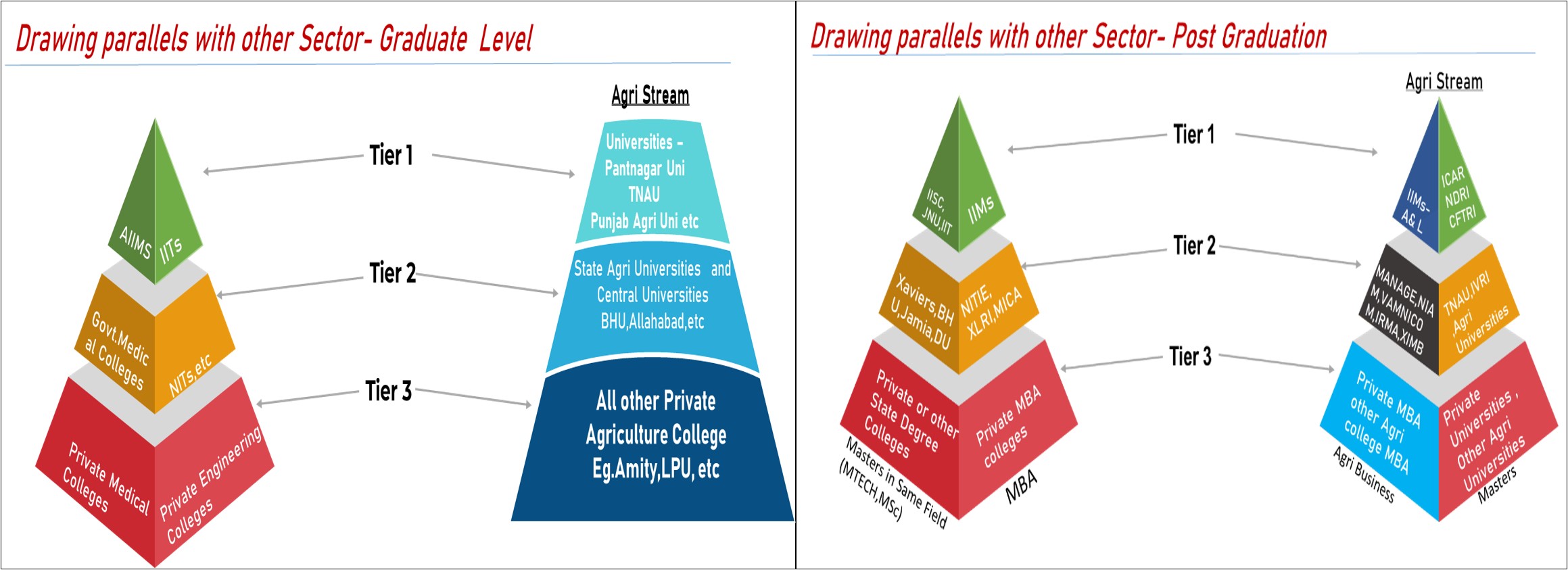
In this sector, just like in IITs and NITs, your graduation college becomes the stepping stone of your career. The college with the best practical and extension education and a strong alumni network stands out. Although completing a post-graduation degree from a top college can offset the effects of graduating from a less prestigious institution, it still helps if a student can get into a top post-graduate college. For example, if a student graduates from GB Pant University, they will have more opportunities, such as campus placements from banks and other companies. However, if this student plans to pursue an MBA in Agribusiness but only manages to get into a Tier 3 college, they will still have an advantage in campus placements (though the starting salaries might be lower). As the student gains experience and seeks better opportunities, their graduation from a reputable college and a strong alumni base will provide better options compared to less tiered Universities.
Websites of some of the mentioned institutes in Post
- Govind Ballabh Pant University, Pantnagar
- Tamil Nadu Agriculture University
- Punjab Agriculture University
- Institute of Agricultural Sciences, Banaras Hindu University
- Indian Council of Agricultural Research, Pusa
- MANAGE, Hyderabad ; CCS NIAM, Jaipur
- Vaikunth Mehta National Institute of Cooperative Management, Pune
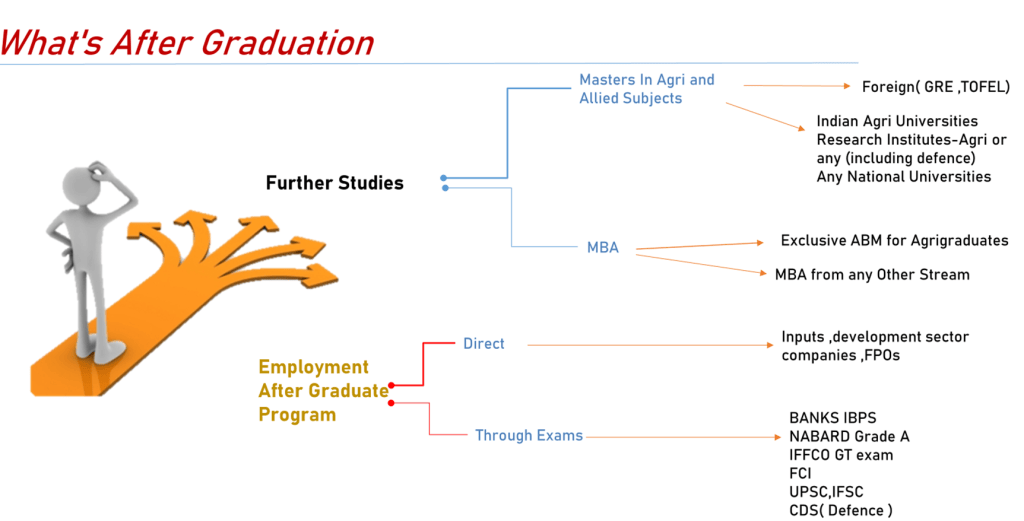
Closing Remarks :
I hope this article provided some useful insights within the agricultural field. While my perspective may be influenced by my background as an agriculture graduate from Pantnagar University, I have aimed to present the information as objectively as possible. It’s important to note that the agriculture sector is vast, and this article focused specifically on postgraduate MBA opportunities. There are numerous other avenues for postgraduate studies in agriculture that deserve equal attention, which I could not cover in this piece. I encourage readers to explore further and gather information from diverse sources to gain a comprehensive understanding of the subject
It would be remiss not to mention some of the other prestigious universities and MBA colleges that offer esteemed programs in agriculture and allied disciplines, beyond those referenced in the article. These institutions contribute significantly to advancing knowledge and nurturing talent in this vital sector. Some notable examples include:
| Agri and Allied -GRADUATION | Agri-Business Management |
|---|---|
| Hisar Agriculture University, Haryana | CABM- Pantnagar, Uttarakhand |
| Anand Agriculture University, Gujarat | NAARM, Hyderabad |
| PDKV & MPKV University, Maharashtra | SIIB, Symbiosis, Pune |
| University of Agriculture Sciences, Bangalore | Indian Institute of Plantation Management Bangalore |
| Odisha University of Agriculture & Technology, Bhubaneswar | IABM, Bikaner |
| List of Other Agri Universities_ Link | List of Other Agri MBA options _Link |
Read more Blogs here
How Turmeric FPOs Can Think About Price Risk in a Spot and Futures Market
Turmeric FPOs face the same crunch almost every season: arrivals peak, farmers need cash, and prices feel weak right when most of the crop hits the market. Recent public mandi references, including Nizamabad and other turmeric markets, have shown harvest-time prices mostly in a lower band, with average…
Digital Bharat, Digital Kisan
How Technology Can Rewrite the FPO Playbook Indian agriculture has entered a new phase. Union Budgets are no longer only about MSP and subsidies—they now emphasize AI platforms, digital public infrastructure (DPI), and data‑driven decision-making. For Farmer Producer Organizations (FPOs), this shift is not theoretical; it is…

ओएनडीसी नेटवर्क : एफपीओ के लिए डिजिटल बाजार
ONDC एक डिजिटल बाजार है जो किसानों और विक्रेताओं को सीधे जोड़ता है। इसमें कमीशन का बोझ नहीं है और छोटे और बड़े सभी खिलाड़ी आजादी से प्रतिस्पर्धा कर सकते हैं। ONDC FPOs के लिए एक अच्छा विकल्प हो सकता है।


Leave a comment